Pork Ribs Soup with Radish and Goji Berries

Prep Time: 15 minutes | Cook Time: 45 minutes | Total Time: 1 hour | Active Time: 15 minutes | Servings: 2
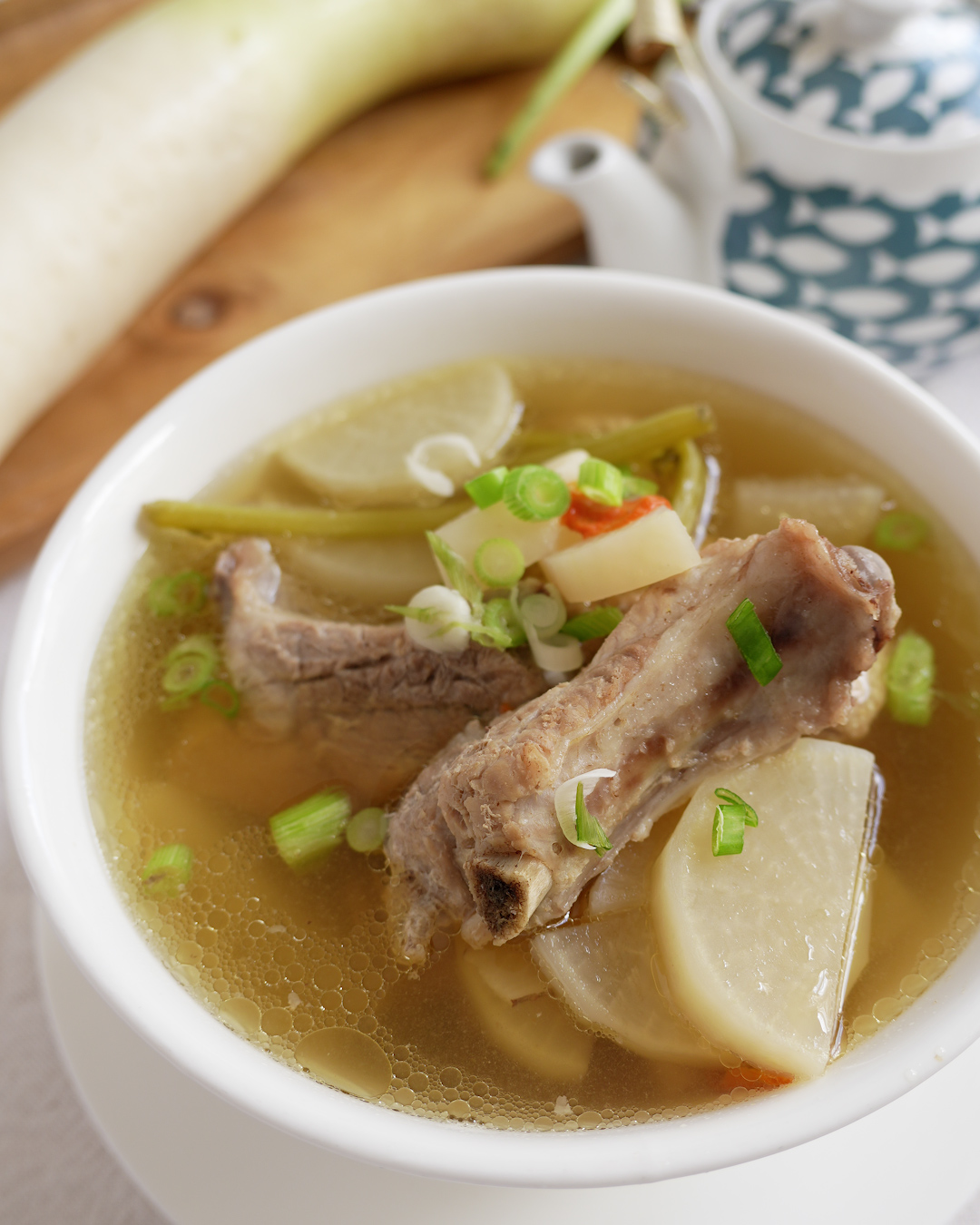
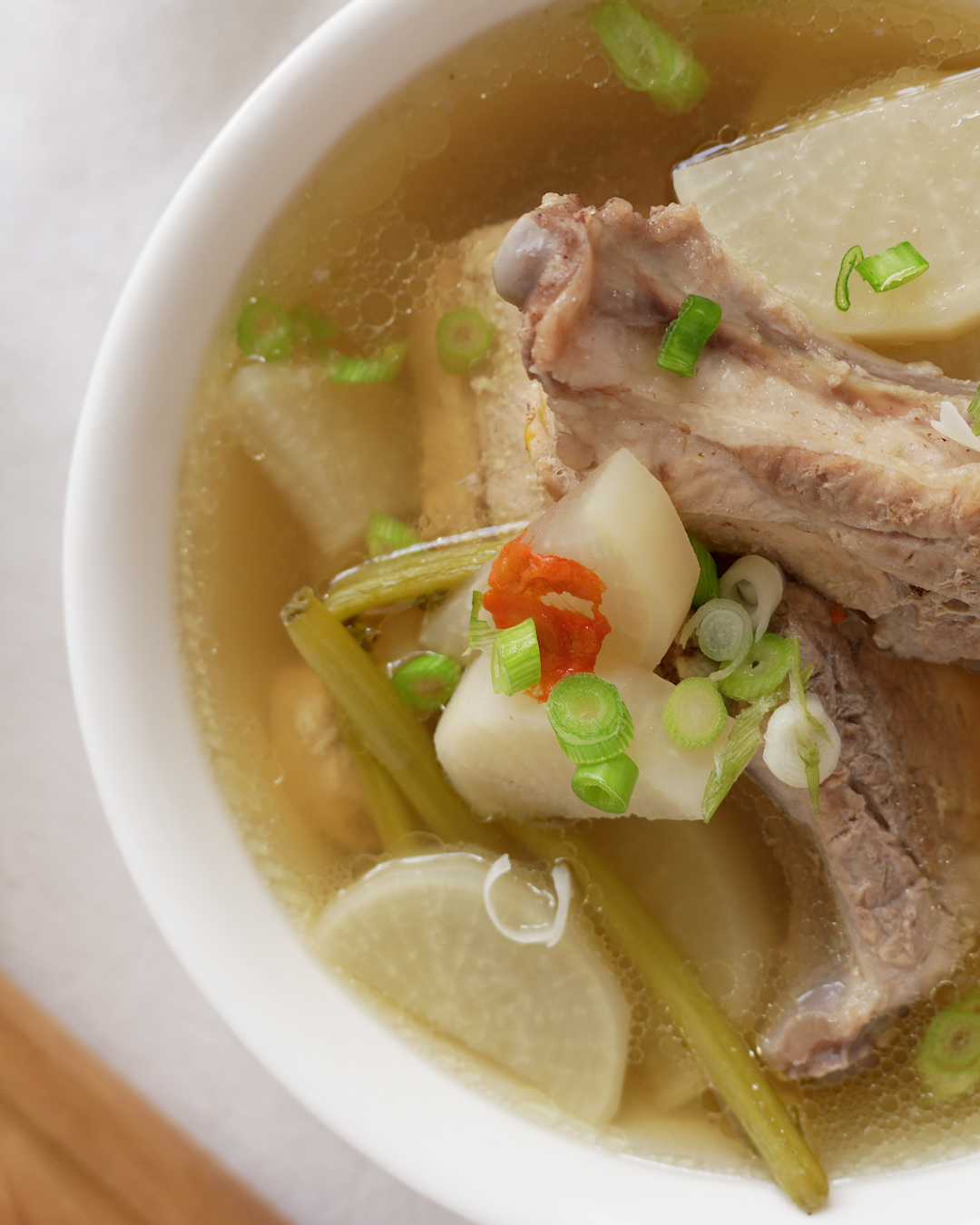
This pork ribs soup with radish is a light, savoury Chinese soup with tender pork ribs and soft radish with natural sweetness from yuk chuk (Solomon’s seal, 玉竹), and goji berries (枸杞).
Watch How to Make It
Equipment
A medium pot with a lid. Any standard 2–3 litre stockpot works well.
What Is Yuk Chuk?
Yuk chuk (玉竹) is the dried rhizome of Solomon’s seal, a mild herb commonly added to Chinese herbal soups. It has a subtle sweetness and a slight nuttiness that blends quietly into the broth without standing out. It is often used in soups during hot or dry weather as it is believed to help cool and hydrate the body. You can find it at Chinese medical halls and most Asian grocery stores, sold dried in small packets. The most common mistake is adding too much.
What Are Goji Berries?
Goji berries (枸杞, gǒuqǐ) are small dried red berries widely used in Chinese cooking and herbal medicine. They have a mild sweetness with a slight tanginess and add a subtle flavour and natural colour to soups and teas. In Chinese food therapy, they are commonly used to support eye health and boost energy. You can find them at Chinese medical halls and most Asian grocery stores, sold dried in small bags.
Ingredients You’ll Need
Serves 2
- 500 grams pork ribs (500克肋排)
- 1 (+/- 450 grams) radish (1个(约450克)白萝卜)
- 7 grams yuk chuk (7克玉竹) (buy from Shopee, Lazada and Amazon)
- 30 grams goji berries (30克枸杞) (buy from Shopee, Lazada and Amazon)
- 1500 ml water (1500毫升水)
- Salt to taste (盐调味)
Garnish (装饰)
- 1 sprig Chinese celery (daun sup), cut into 1.5 inch lengths 1根芹菜,切成1.5英寸长的段 or 2 sprigs spring onions, diced (2根小葱,切丁)
How to Make Pork Ribs Soup with Radish and Goji Berries
Step 1 — Prepare the Radish
Wash the radish. Peel off the skin and cut it into smaller chunks. You can also include the radish leaves if you have them. They add a mild flavour to the broth.
Step 2 — Blanch the Pork Ribs
Place the pork ribs in a pot and cover with cold water. Bring to a boil over high heat. Drain and rinse the ribs under running water, removing any grey foam or residue.
Tip: Blanching the pork ribs is what gives you a clear soup. Skipping this step will result in a cloudy, grey broth.
Step 3 — Rinse the yuk chuk and goji berries
Rinse the yuk chuk and goji berries before using them.
Step 4 — Combine All Ingredients
Add the blanched pork ribs, radish, yuk chuk, and goji berries into a clean pot. Pour in 1500 ml of water.
Step 5 — Simmer the Soup
Bring the pot to a boil over high heat. Once boiling, lower the heat and simmer on low for 45 minutes. Season with salt to taste. Serve garnished with Chinese celery or diced spring onions.
Tip: If you prefer the meat more tender and falling off the bone, extend the simmering time to 1.5 hours.
Tips for the Best Pork Ribs Soup with Radish
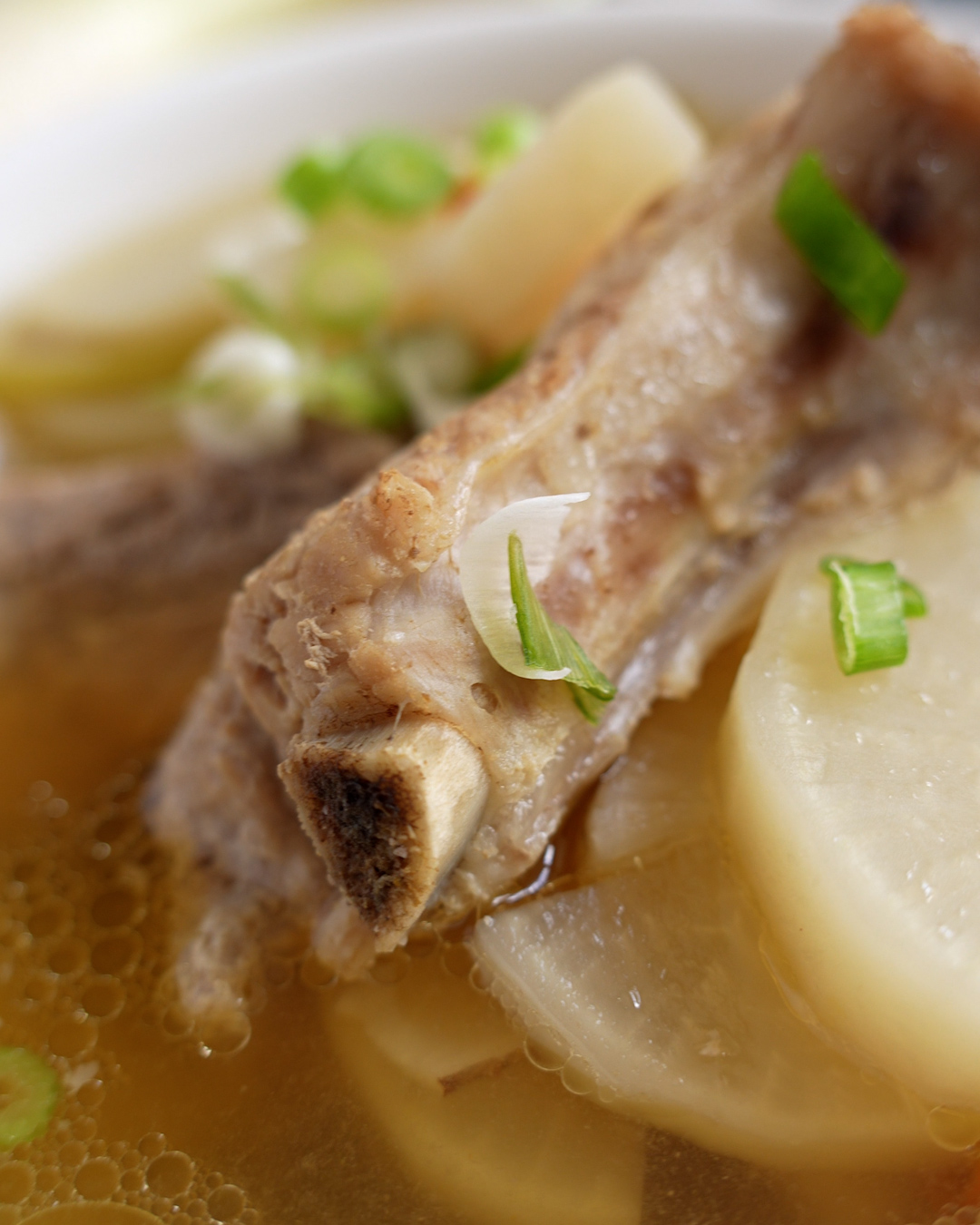
- Use spare ribs or the soft bone area. These cuts have more connective tissue around the bone, which gives the broth more body and keeps the meat tender after a long simmer. Back ribs work but tend to be leaner.
- Don’t skip the blanching step. It removes blood and impurities from the pork and is the key to a clear, light broth.
Frequently Asked Questions
Do I have to blanch the pork ribs before making the soup?
Yes, blanching is important. It removes the blood and impurities from the pork, which keeps the broth clear. Skipping this step results in a cloudy, grey soup.
What cut of pork ribs should I use?
Spare ribs or ribs from the soft bone area work best. They have more connective tissue around the bone, which gives the broth more body and keeps the meat tender after a long simmer.
Can I add other vegetables to this soup?
Yes. Carrots are a common addition and add extra sweetness. Corn on the cob works well too. You can also throw in the radish leaves if you have them.
Are the yuk chuk and goji berries necessary?
No, they are optional. The soup works well as a simple pork rib and radish soup on its own. Adding yuk chuk and goji berries gives the broth a mild natural sweetness and a gentle herbal quality.
How long can I store the soup?
Keep it in the fridge for up to 3 days. Reheat on the stove over medium heat until hot.
Tried this recipe? Leave a comment below and let me know how it turned out! Don’t forget to tag @ruyiasianrecipes if you share it on social media.
You Might Also Like:
- Chinese Fish Soup with Tomato and Tung Choi
- Steamed Pork Ribs with Fermented Black Beans
- One Pot Herbal Chicken with Noodles in Rice Cooker
Pork Ribs Soup with Radish and Goji Berries
Ingredients
- 500 grams pork ribs (500克肋排)
- 1 radish, +/- 450 grams (1个(约450克)白萝卜)
- 7 grams yuk chuk (7克玉竹)
- 30 grams goji berries (30克枸杞)
- 1500 ml water (1500毫升水)
- salt to taste (盐调味)
Garnish (装饰)
- 1 sprig Chinese celery (daun sup), cut into 1.5 inch lengths (1根芹菜,切成1.5英寸长的段)
- or 2 sprigs spring onions, diced (2根小葱,切丁)
Instructions
Step 1 — Prepare the Radish
- Wash the radish. Peel off the skin and cut it into smaller chunks. You can also include the radish leaves if you have them. They add a mild flavour to the broth.
Step 2 — Blanch the Pork Ribs
- Place the pork ribs in a pot and cover with cold water. Bring to a boil over high heat. Drain and rinse the ribs under running water, removing any grey foam or residue.
- Tip: Blanching the pork ribs is what gives you a clear soup. Skipping this step will result in a cloudy, grey broth.
Step 3 — Rinse the Yuk Chuk and Goji Berries
- Rinse the yuk chuk and goji berries before using them.
Step 4 — Combine All Ingredients
- Add the blanched pork ribs, radish, yuk chuk, and goji berries into a clean pot. Pour in 1500 ml of water.
Step 5 — Simmer the Soup
- Bring the pot to a boil over high heat. Once boiling, lower the heat and simmer on low for 45 minutes. Season with salt to taste. Serve garnished with Chinese celery or diced spring onions.
- Tip: If you prefer the meat more tender and falling off the bone, extend the simmering time to 1.5 hours.
Video
Notes
- Use spare ribs or the soft bone area. These cuts have more connective tissue around the bone, which gives the broth more body and keeps the meat tender after a long simmer. Back ribs work but tend to be leaner.
- Don’t skip the blanching step. It removes blood and impurities from the pork and is the key to a clear, light broth.