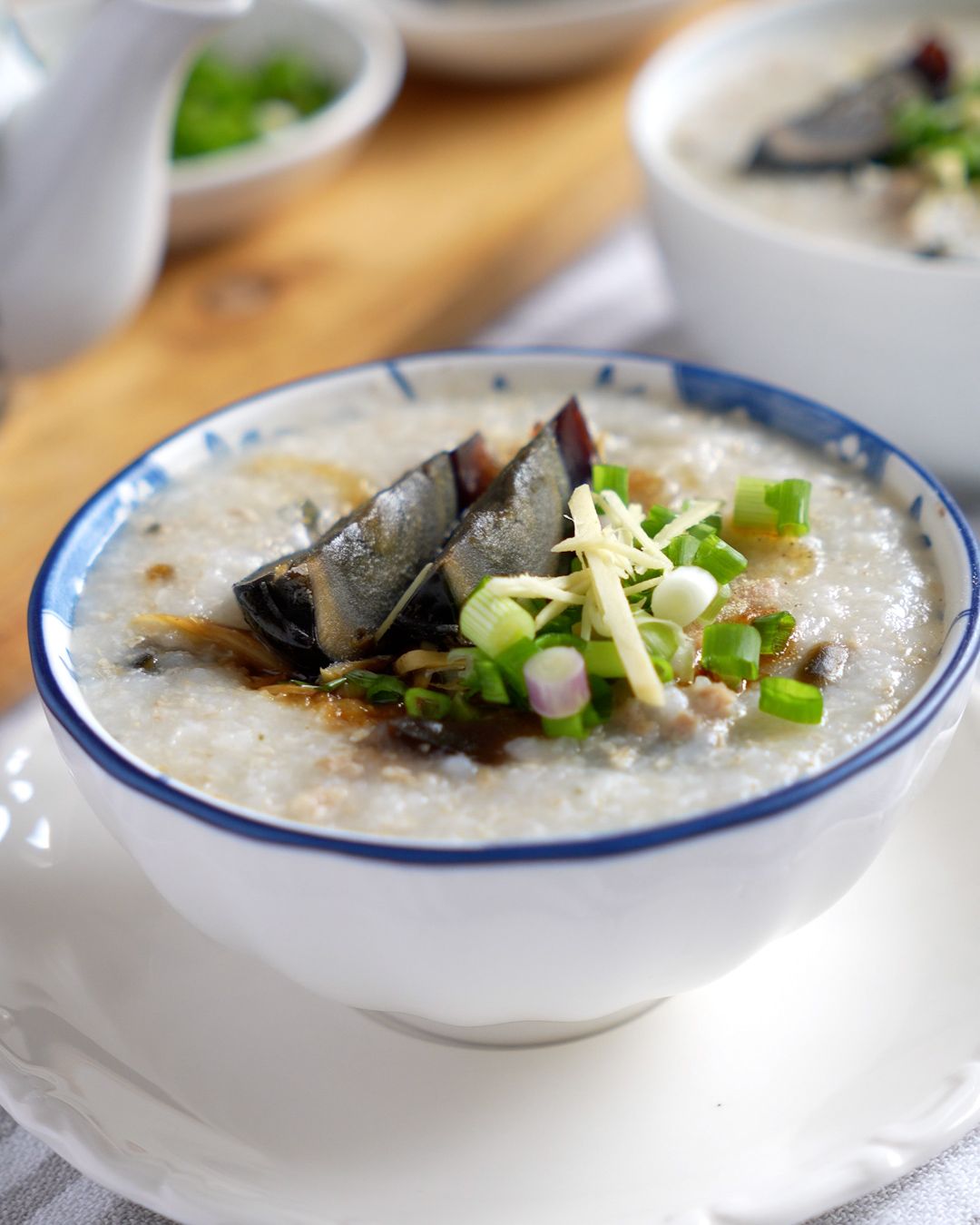
Minced Pork Century Egg Porridge in Rice Cooker
Servings: 2 servings
Ingredients
- 300 grams minced pork (300克猪肉末)
- 1 cup white rice (1杯白米)
- 5-6 cups water (5-6杯水)
- 1 slice ginger (1片生姜)
- 3 century eggs (3个皮蛋)
Pork Marinade (猪肉腌料)
- 1/2 teaspoon salt (1/2 茶匙盐)
- 1/4 teaspoon white pepper (1/4 茶匙白胡椒粉)
- 1 teaspoon cornstarch (1 茶匙玉米淀粉)
Garnish Per Serving (每份装饰)
- 1 tablespoon spring onion (1 汤匙葱花)
- few drops of sesame oil (几滴芝麻油)
- some julienned ginger (少许姜丝)
- 1/2 teaspoon light soy sauce (1/2茶匙生抽)
- dash of white pepper (少许白胡椒粉)
Instructions
Step 1 — Marinate the Pork
- Add the salt, white pepper, and cornstarch to the minced pork. Mix in one direction until the pork forms a sticky paste — this is what makes the meat turn slightly springy once cooked.
Step 2 — Add the Rice and Water
- Add the washed rice to the rice cooker, then pour in the water. Use 1 cup of rice to 5-6 cups of water for this porridge.
Step 3 — Add the Ginger and Pork
- Add the ginger slice to the rice cooker — it takes away any porky smell as the porridge cooks. Place the marinated minced pork on top of the rice and water.
Step 4 — Cook the Porridge
- Cover the lid, tilting it slightly so the porridge doesn't overflow as it bubbles up. Set your rice cooker to cook (use the porridge or congee setting if your model has one) and let it cook for about 1 hour.
- Tip: Tilting the lid matters more than it sounds. Porridge foams up as the rice breaks down, and a fully closed lid can cause it to overflow.
Step 5 — Prep the Century Eggs
- While the porridge cooks, prepare the century eggs: remove the outer shell and cut the eggs into smaller pieces.
Step 6 — Stir in the Century Eggs
- Once the porridge is ready, stir the century egg pieces through the hot porridge.
Step 7 — Season and Garnish
- Season each serving with a few drops of sesame oil, a dash of white pepper, and the light soy sauce, then finish with julienned ginger and spring onion.
Video
Notes
- Marinate the pork well. Mixing it in one direction until sticky keeps the pork tender and springy instead of clumping into hard bits in the porridge.
- Tilt the lid while it cooks. Porridge bubbles up as it thickens — tilting the rice cooker lid slightly stops it from overflowing.
- Adjust the rice-to-water ratio for your preferred texture. I use 1 cup of rice to 6 cups of water for a thinner, silkier porridge. Use less water if you prefer it thicker. If you are afraid that the water might overflow, use 5 cups of water, then once the porridge is cooked, add more water to get the consistency you like.
- You can still adjust the texture after it's done cooking. Stir in a splash of hot water if the porridge is thicker than you'd like, or let it cook a little longer with the lid off to reduce the water and thicken it further.
- Season each bowl separately. Since the sesame oil, white pepper, and light soy sauce are added per serving, this keeps any leftover porridge plain and easier to reheat without over-seasoning it. It also tastes better this way, the seasoning stays fresh and fragrant instead of sitting in the hot porridge and fading.