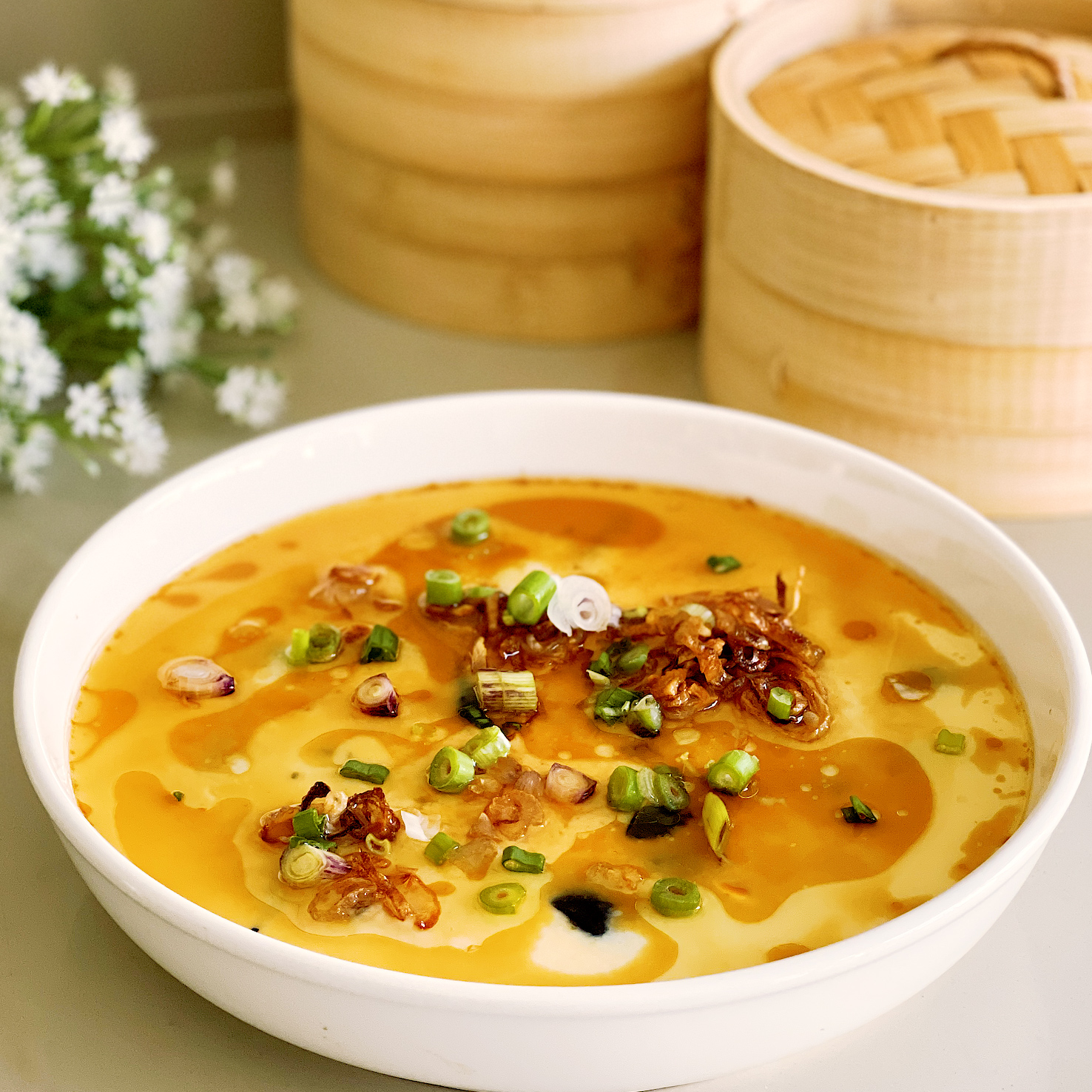
Steamed Trio Eggs with Salted Egg and Century Egg
Servings: 3 servings
Ingredients
- 3 eggs, room temperature (3个鸡蛋,室温)
- 1 salted egg, yolk separated from the white (1个咸蛋,将蛋黄与蛋白分离)
- 1 or 2 century eggs (1个或2个皮蛋)
- 300 ml water, room temperature (300毫升水,室温)
Shallot Oil (葱头油)
- 3-4 shallots, thinly sliced (3-4粒洋葱,切成薄片)
- 2-3 tablespoons cooking oil (2-3汤匙食用油)
Seasoning (调料)
- 1 tablespoon shallot oil or a few drops of sesame oil (1汤匙葱头油或几滴芝麻油)
- 1 tablespoon light soy sauce (1汤匙生抽)
Garnish (装饰)
- 2 sprigs spring onions, diced (2根小葱,切碎)
Instructions
Step 1 — Prep the salted egg and century egg
- Wash the salted egg and century egg clean, then set them aside.
- Crack the salted egg and separate the yolk from the white, keeping both.
- Remove the shell from the century egg.
Step 2 — Mix the egg base
- In a bowl, mix the three eggs with the salted egg white, then mix in 300 ml of room temperature water.
- Tip: Use a fork or a pair of chopsticks to mix, not a whisk. A whisk beats in a lot of air and the bubbles will set into the surface as it steams.
Step 3 — Add the century egg and salted egg yolk
- Pour the mixture into a plate for steaming.
- Cut the century egg into small chunks and place them into the egg mixture, then cut the salted egg yolk into small chunks and add those as well.
- Skim off any bubbles sitting on the surface before it goes into the steamer.
Step 4 — Steam on low heat
- Once the water is boiling, steam on low heat for 12 to 15 minutes.
- Tip: Low heat is what gives you a silky smooth surface. On high heat the egg cooks too fast and sets pitted and uneven. Leave a small gap at the lid as well, so the heat spreads more evenly.
Step 5 — Make the shallot oil
- While the eggs are steaming, make the shallot oil. Saute the sliced shallots in the cooking oil over medium heat until they turn slightly golden brown, then transfer them to a bowl straight away.
- Tip: Move the shallots off the heat as soon as they colour. They carry on cooking in the hot oil, and overcooked shallots turn bitter.
Step 6 — Season and serve
- Once the eggs are steamed, season with a tablespoon of shallot oil or a few drops of sesame oil, then add one tablespoon of light soy sauce.
- Garnish with the diced spring onions and serve warm.
Video
Notes
- Mix with a fork or chopsticks, never a whisk. A whisk creates a lot of bubbles, and those bubbles set into the surface of the steamed egg.
- Remove any bubbles before steaming. Skim the surface just before the plate goes in, so the top sets smooth.
- Steam on low heat. High heat is the main reason a steamed egg comes out pitted instead of smooth.
- Leave a gap at the lid. A small gap lets the heat distribute more evenly and stops condensation dripping onto the surface.
- Use room temperature eggs and water. If you use cold eggs, you need to adjust the steam time.
- Do not overcook the shallots. Take them off the heat as soon as they are lightly golden, or they will taste bitter.